From Project Experience to a Practical Educational Toolkit
Aveiro, Portugal – September 2026
On 21 September 2026, DCTR facilitated an international online co-creation workshop dedicated to the development of the final methodological e-book of the RE.W.I.N.D. WOMEN project. The session brought together young participants, youth workers and representatives of the partner organisations to transform the experiences accumulated throughout the project into a practical educational resource.
The e-book is being developed as a toolkit for youth workers, cultural organisations and community groups interested in using storytelling, artistic practices and Educational Live Action Role Play (EDU-LARP) to address gender stereotypes and the representation of women.
Rather than simply presenting the project’s activities, it aims to explain how its methods were developed, implemented and evaluated, allowing other organisations to understand and adapt them to their own contexts.
Before the workshop, DCTR prepared the e-book’s structure and visual layout and compiled its technical content. This included descriptions of the workshops, the “The Race” LARP scenario, game rules and materials, the character development process, facilitation and evaluation resources, and dedicated sections for the national LARP events.
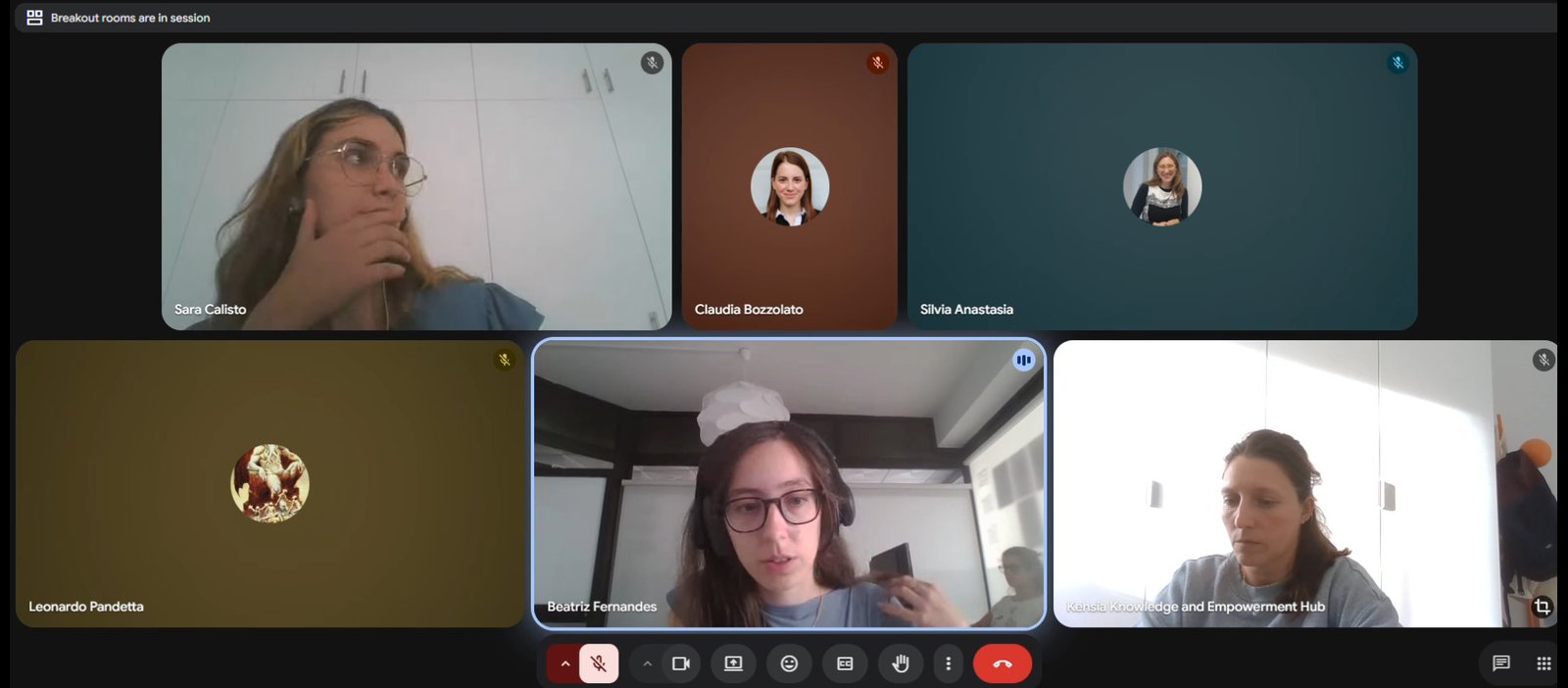
How the E-book Co-creation Workshop Was Organised
The purpose of the session was not to create the publication from a blank page, but to complement its technical content with the participants’ lived experiences. Participants were invited to identify what worked well, what proved difficult, what changed during the process and what another organisation should know before attempting to replicate the activities.
They were also encouraged to identify photographs, videos and other materials capable of documenting the project’s development, while considering authorship, consent and permission for publication.
Following an introduction to the e-book and a collective memory activation exercise, participants worked in four thematic groups. The first reflected on the overall project journey, including the transnational mobilities in Viterbo and Thessaloniki, the creative writing process and the national character development sessions.
The second group focused on the gender stereotypes, storytelling, theatrical techniques and artistic workshops. The third examined “The Race” scenario, its characters, gameplay materials and mechanics. The fourth explored facilitation, emotional safety, evaluation, project resources and the future national LARP events.
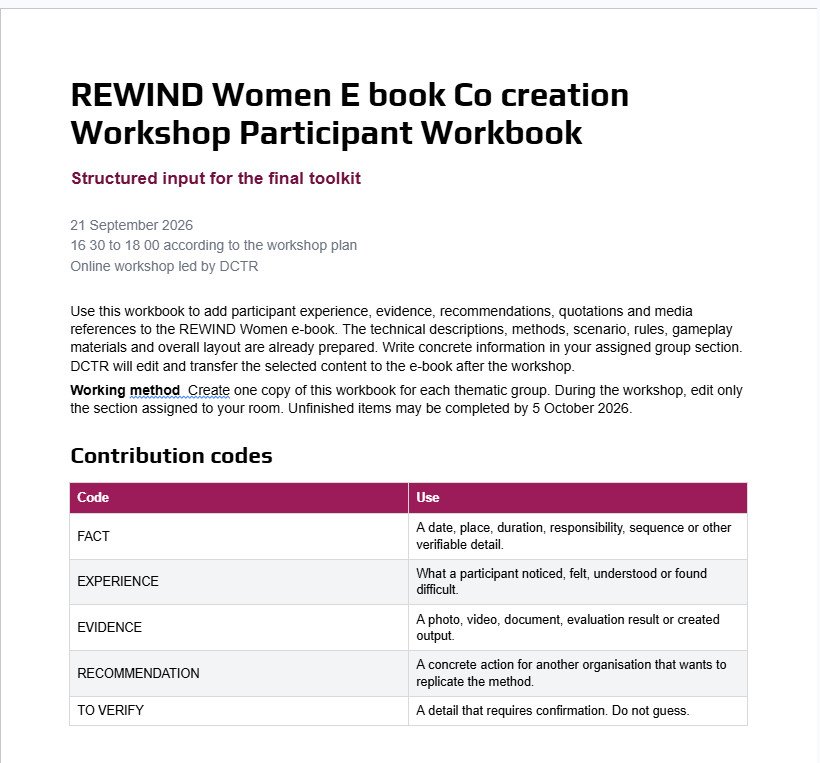
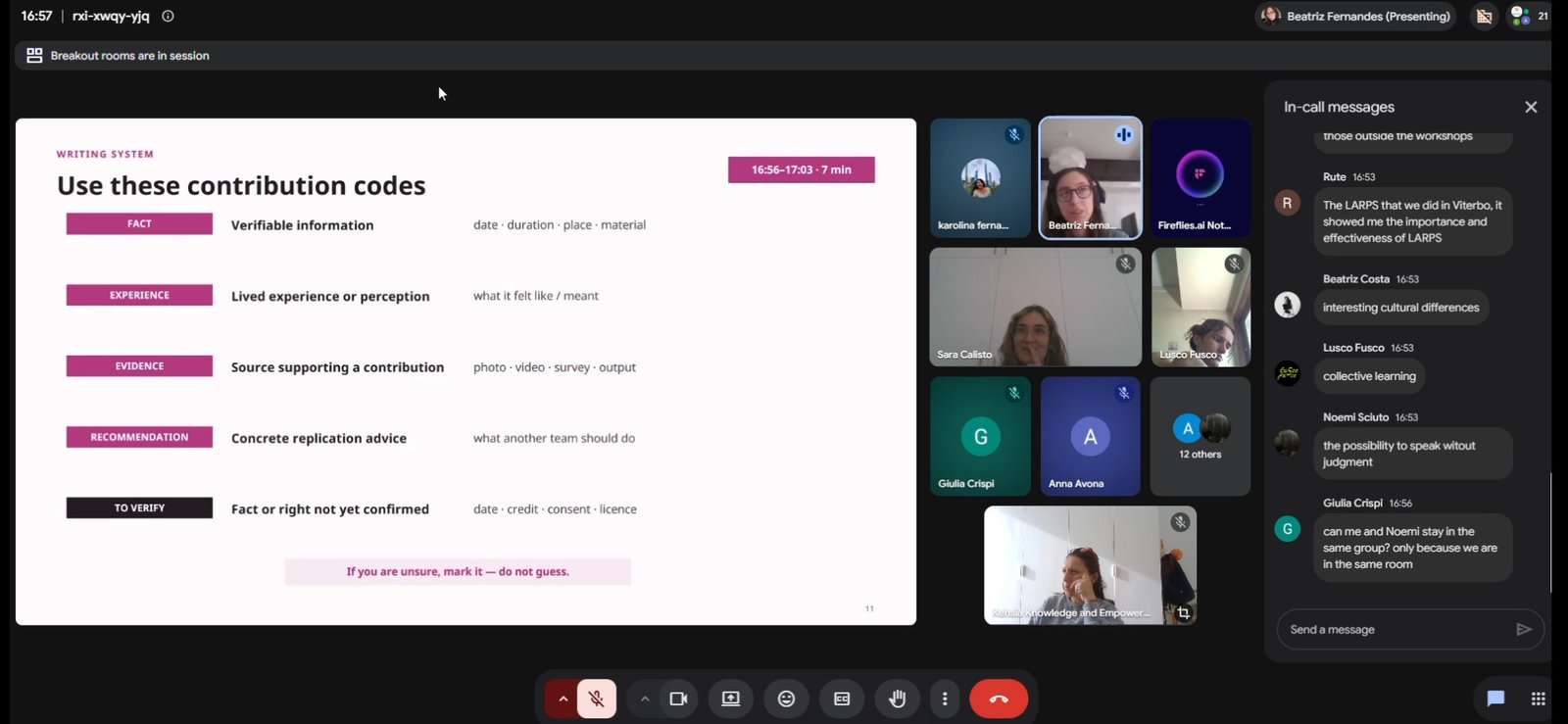
Each group used a structured workbook to distinguish between verifiable facts, personal experiences, supporting evidence, recommendations for replication and information requiring further verification. Specific roles were distributed within the groups to support participation, document the discussion, identify evidence, consider the replicability of the proposed content and manage the available time.
Participant Insights: Human Connection, Learning and Safer LARP Practice
The contributions highlighted the importance of the human and intercultural connections developed during the project. Participants described how informal moments, shared activities and collaboration between people from different countries strengthened trust and influenced the quality of the creative process.
They also reflected on the capacity of LARP to introduce sensitive subjects through experience, allowing participants to explore different perspectives and recognise social dynamics that may be difficult to address through discussion alone.
The groups identified several practical lessons for future implementation. These included the need to provide clear information before participants enter their characters, allow sufficient time for interaction and decision-making, establish well-defined support mechanisms and always include a structured debriefing after the game.
Participants emphasised that stepping out of character and reflecting on what had happened were essential for connecting the fictional experience with real questions of gender, media representation, power and discrimination in sport.
The workshop also produced concrete observations about the development of the characters and scenario. Creative writing supported participants in building more realistic motivations and relationships, while the pilot test in Thessaloniki revealed both effective elements and areas requiring clarification.
Feedback addressed the rhythm of the game, the time available for discussion, the role of journalists, the presentation of petitions and the importance of preserving player agency without compromising emotional safety.
Next Steps: Completing the E-book and Preparing the National LARPs
DCTR will now consolidate and edit the contributions collected through the four workbooks, verify factual information and media permissions, and integrate the selected content into the final publication.
Additional information will be gathered following the national LARP events, ensuring that the e-book documents not only the design process but also the adaptation and implementation of the experience in each partner country.
The co-creation workshop represented an important step in turning the collective RE.W.I.N.D. WOMEN journey into a transferable educational resource. By placing participants’ voices alongside the project’s methodologies and materials, the final e-book will reflect both how the activities were designed and what was learned by the people who experienced them.
The next phase will bring the RE.W.I.N.D. WOMEN methodology to local communities through national EDU-LARP events in all partner countries. In Portugal, DCTR will host the national LARP on 7 November 2026, in Aveiro, continuing the project’s work of challenging gender stereotypes through creativity, participation and immersive learning.
Sobre os Parceiros
- L’Isola che c’è ONLUS (Itália) – Líder do projeto, especialista em educação para jovens e metodologias de aprendizagem gamificada.
- KEHSIA asbl (Luxemburgo) – Responsável pela comunicação, monitorização e investigação, com foco em ciência cidadã e igualdade de género.
- PYLON ONE (Grécia) – Promove a capacitação juvenil através da educação e inovação digital.
- DCTR – Associação Cultural (Portugal) – Conduz a direção cultural, narrativa e artística do projeto, com enfoque em storytelling, arte e transformação social.
- Skill Hub (Itália) – Dinamiza a componente artística e colabora na disseminação nacional de boas práticas criativas.